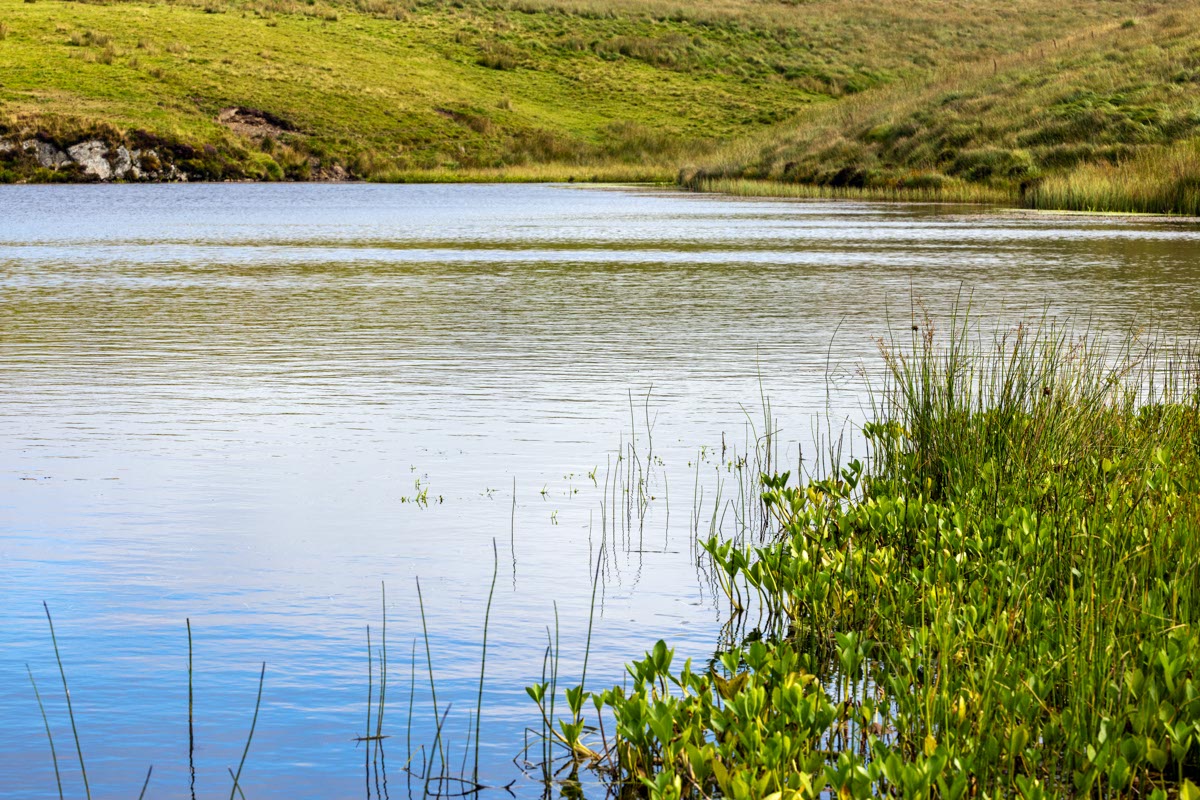
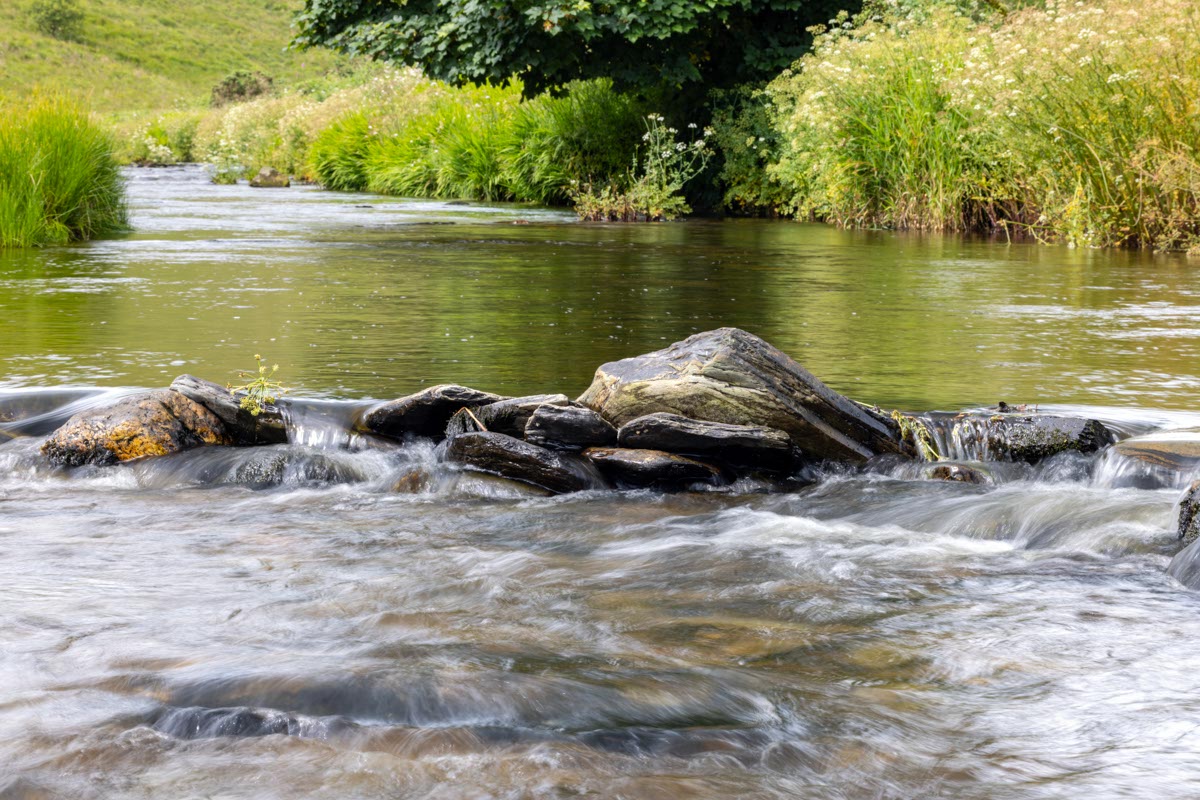
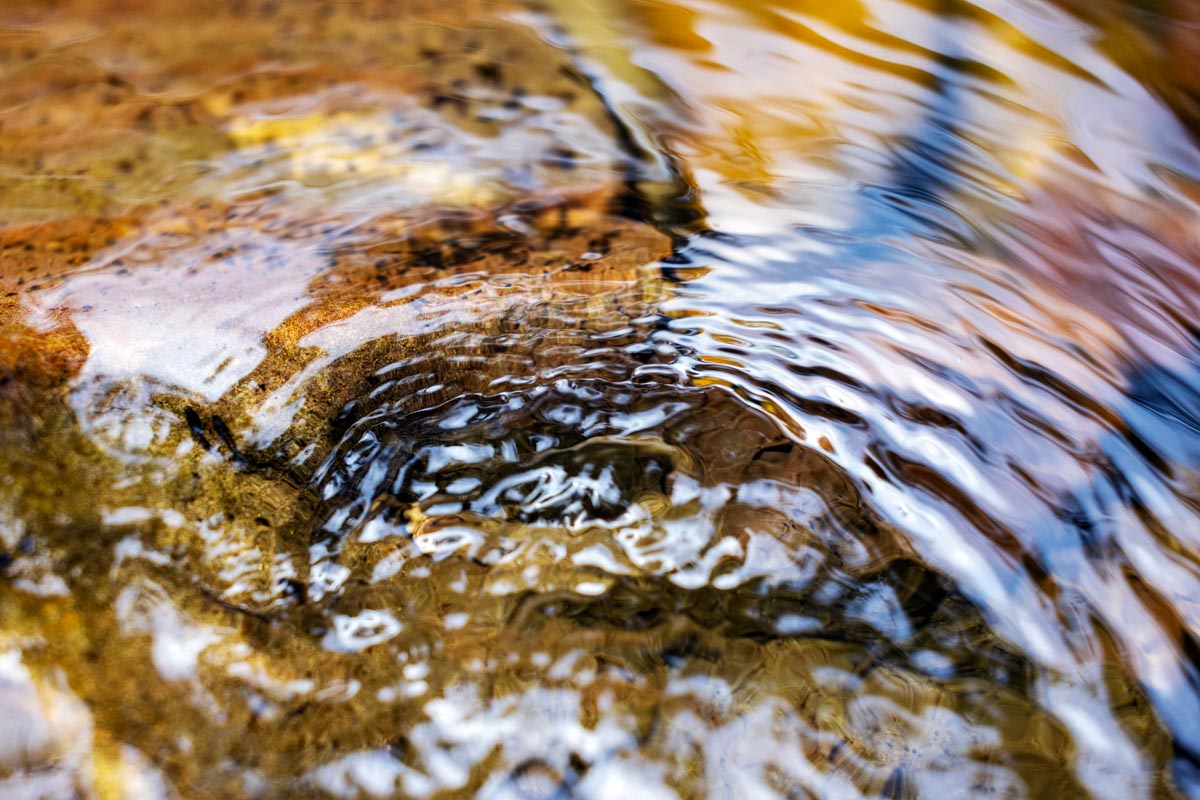
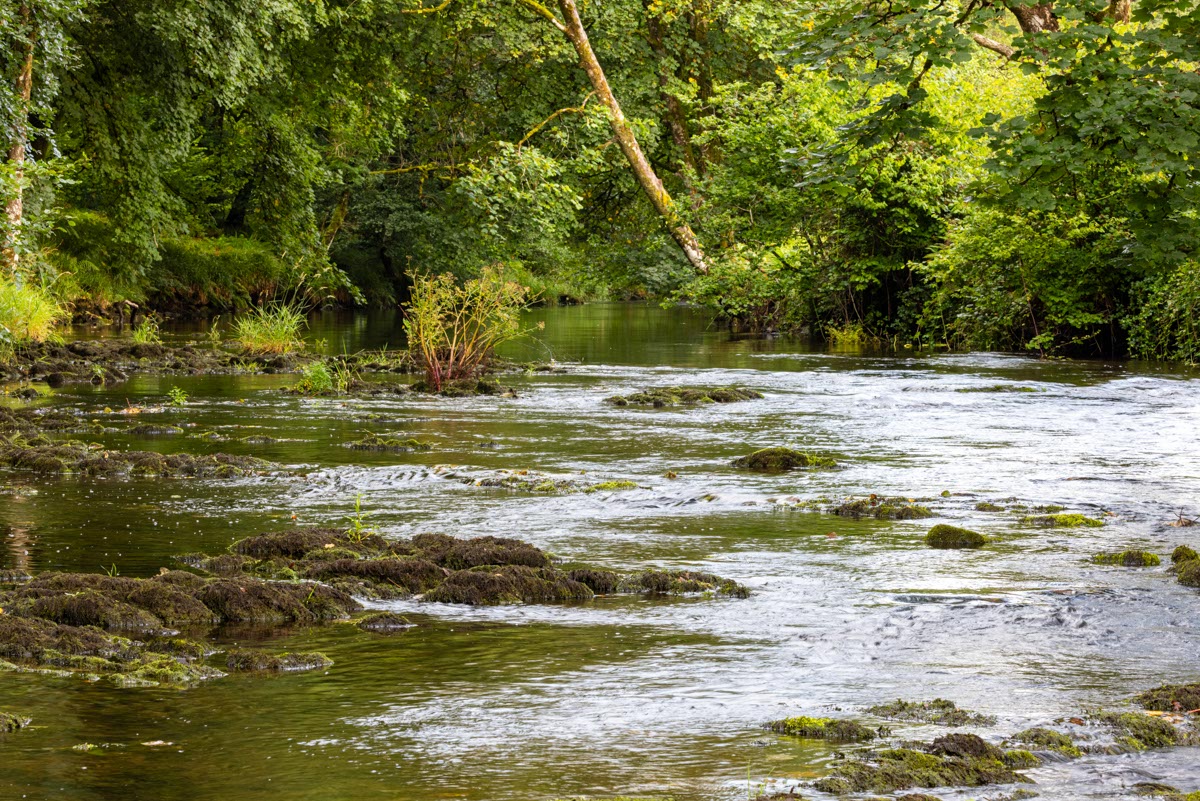
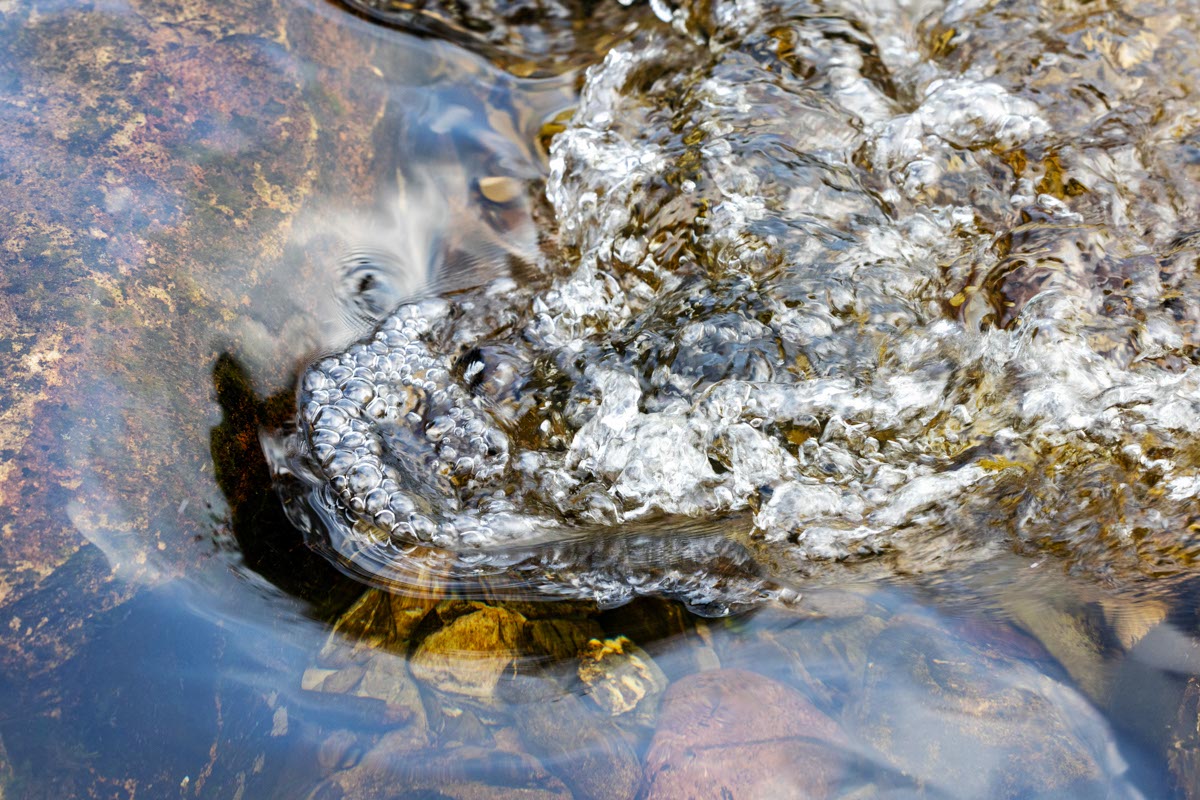
Freshwater flows across Exmoor. From open moorland, through wooded combes and down to rocky coast, the sounds of lotic ecosystems – moving inland waters – flood the landscape.
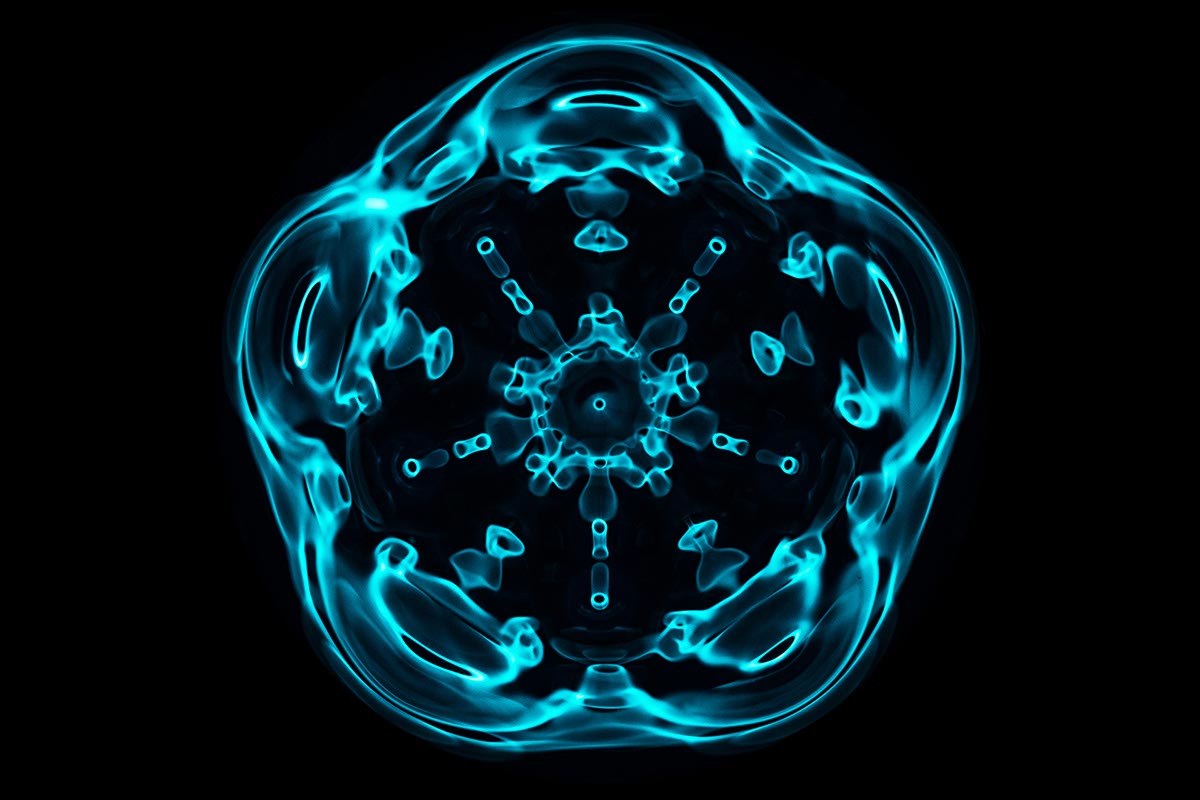
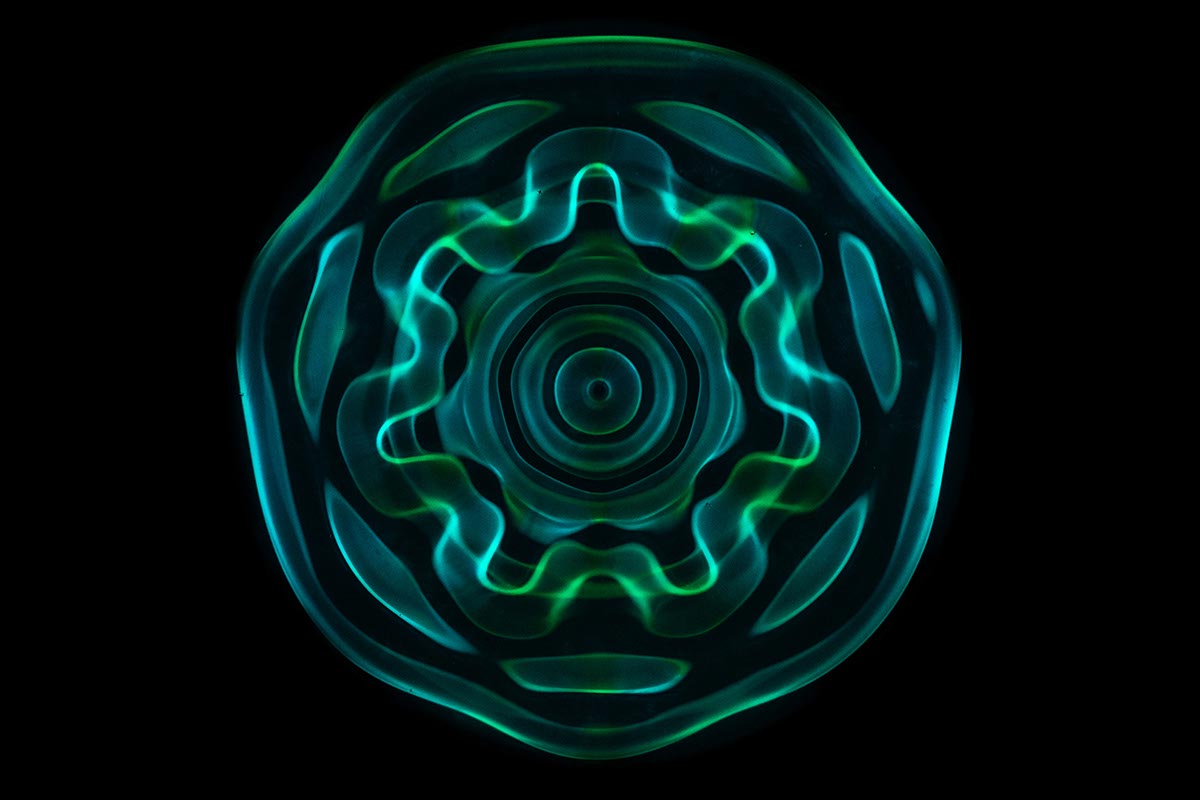
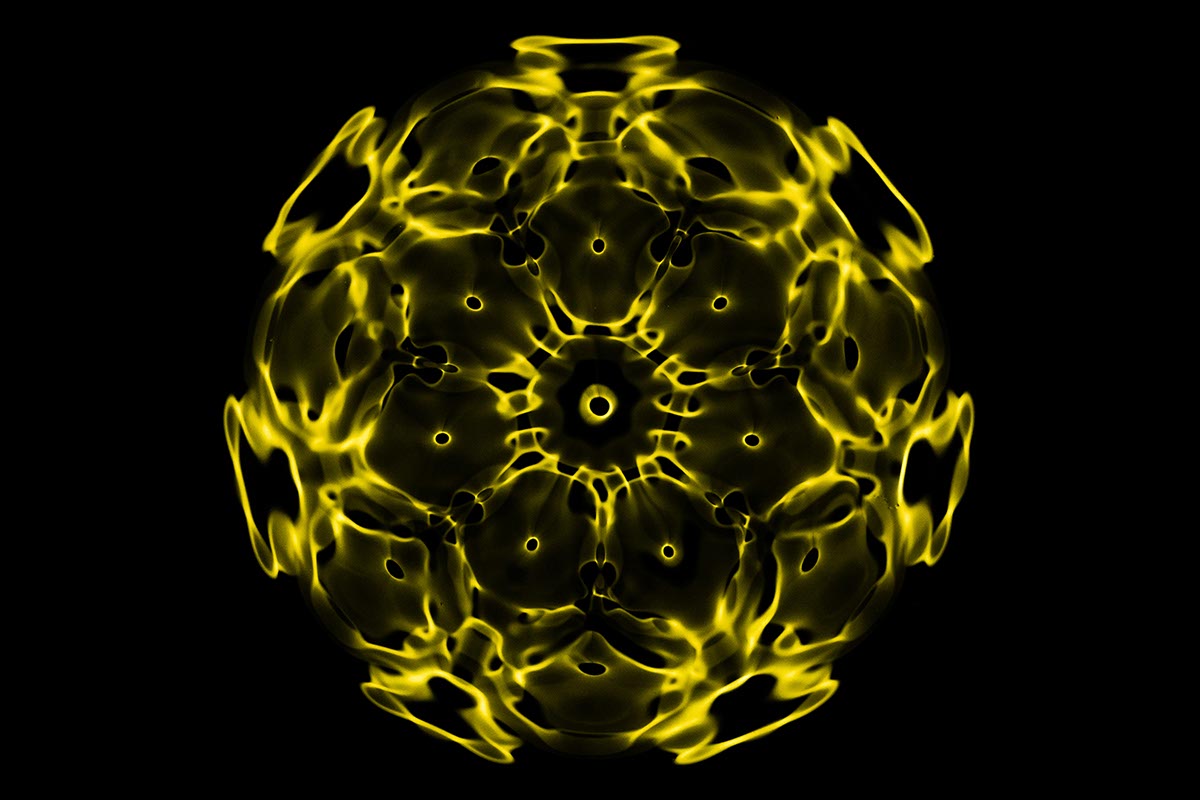
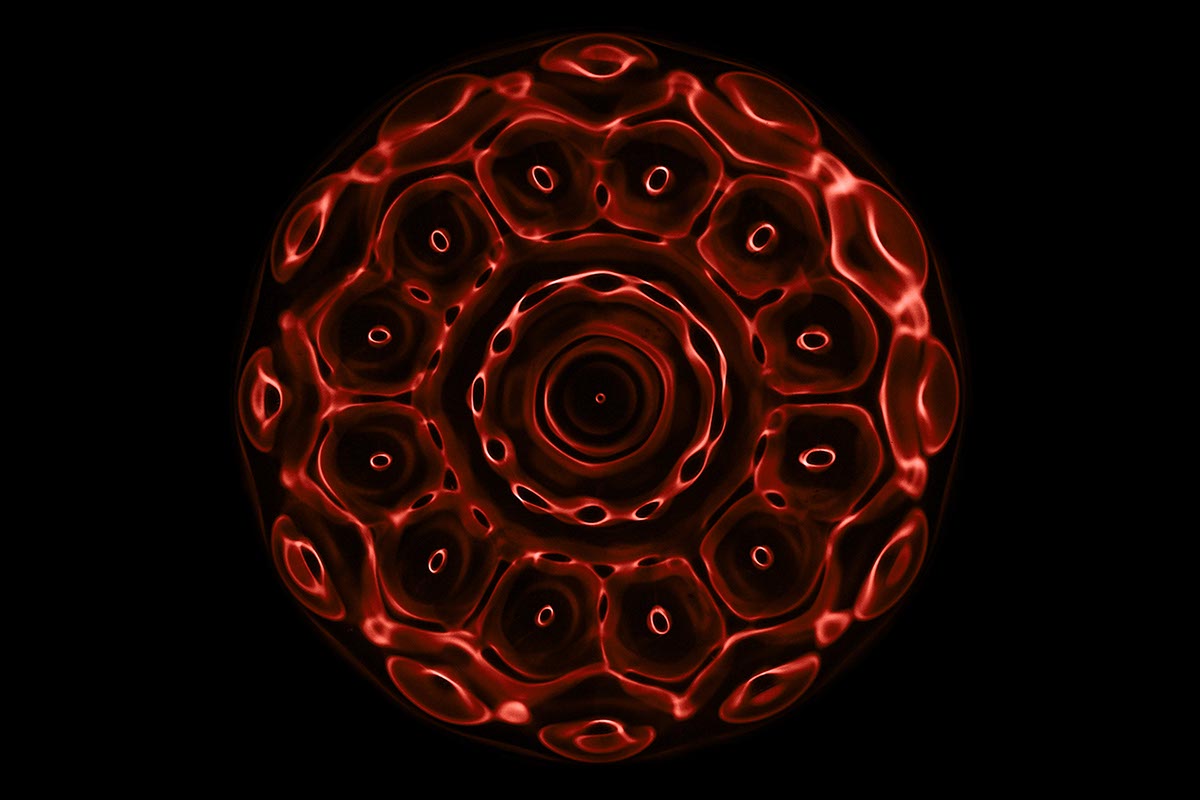
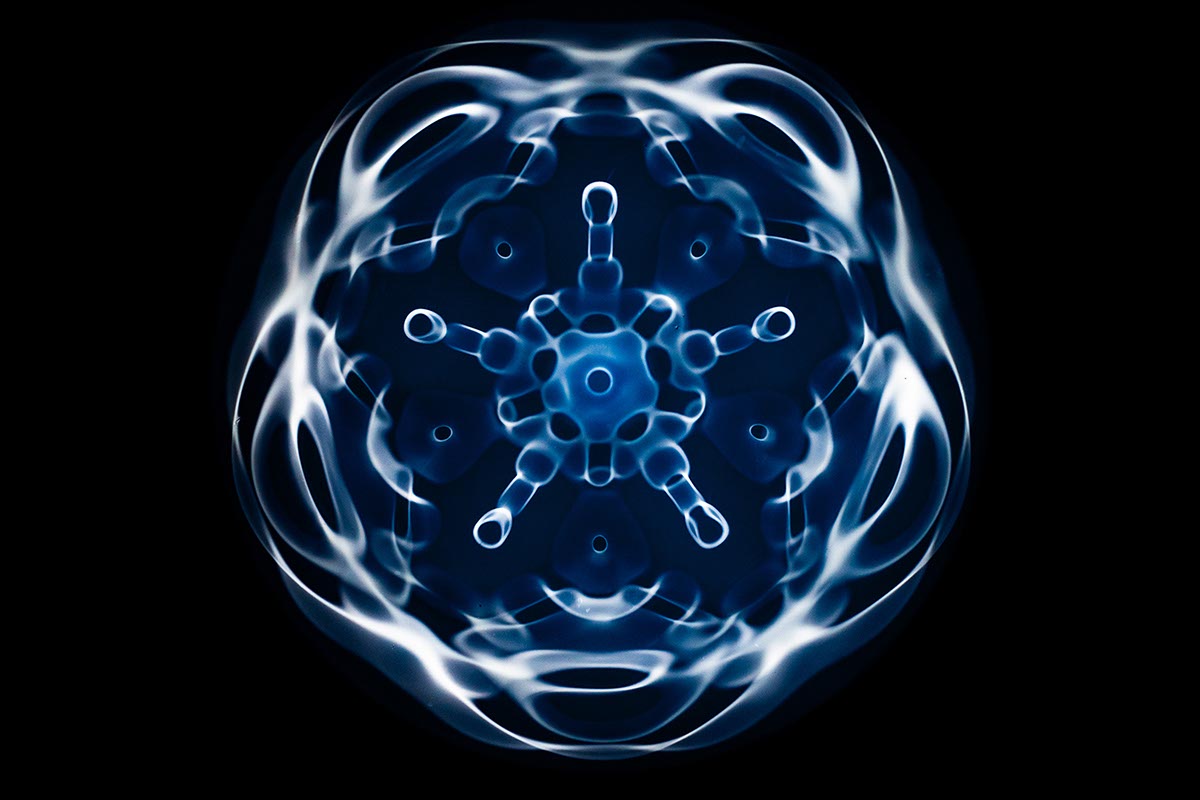
This experimental artwork uses cymatics (the science of visualising sound waves) to embody the voices of Exmoor’s rivers. It combines photography, moving image, science and sound, to reveal the rich and varied nature of this lyrical flow.
Rivers sustain the natural environment. They have the power to shape both life and land, but they’re in crisis. If our rivers are going to survive and thrive, then their voices must be heard and valued. To this end, I used an underwater microphone to collect the sounds of trickling natural springs, burbling rocky streams and rushing, rain-swollen rivers. These audio recordings were used to develop a studio-based cymatics experiment, which transformed the sounds of Exmoor’s waters into enchanting, luminous images.
The process involved placing a shallow dish of water on top of a speaker cone, which was lit from above using colours picked from the landscape. The audio files were then played through an amplifier, which created vibrations on the liquid’s surface, effectively making the sound waves visible. These oscillating wave forms revealed distinct geometric patterns whenever a resonant frequency was reached.
By reimagining the rivers’ song in this way, I draw attention to these special places and the nature of our relationship with them. Ultimately, Lotic Waters aims to connect audiences with their local rivers and thereby promote sustainable stewardship for these vital freshwater habitats.
This work was created during an artist residency, which was made possible thanks to funding from Arts Council England and was part of the Ignite Somerset programme of work delivered by Somerset Film as part of their role as a National Portfolio Organisation.
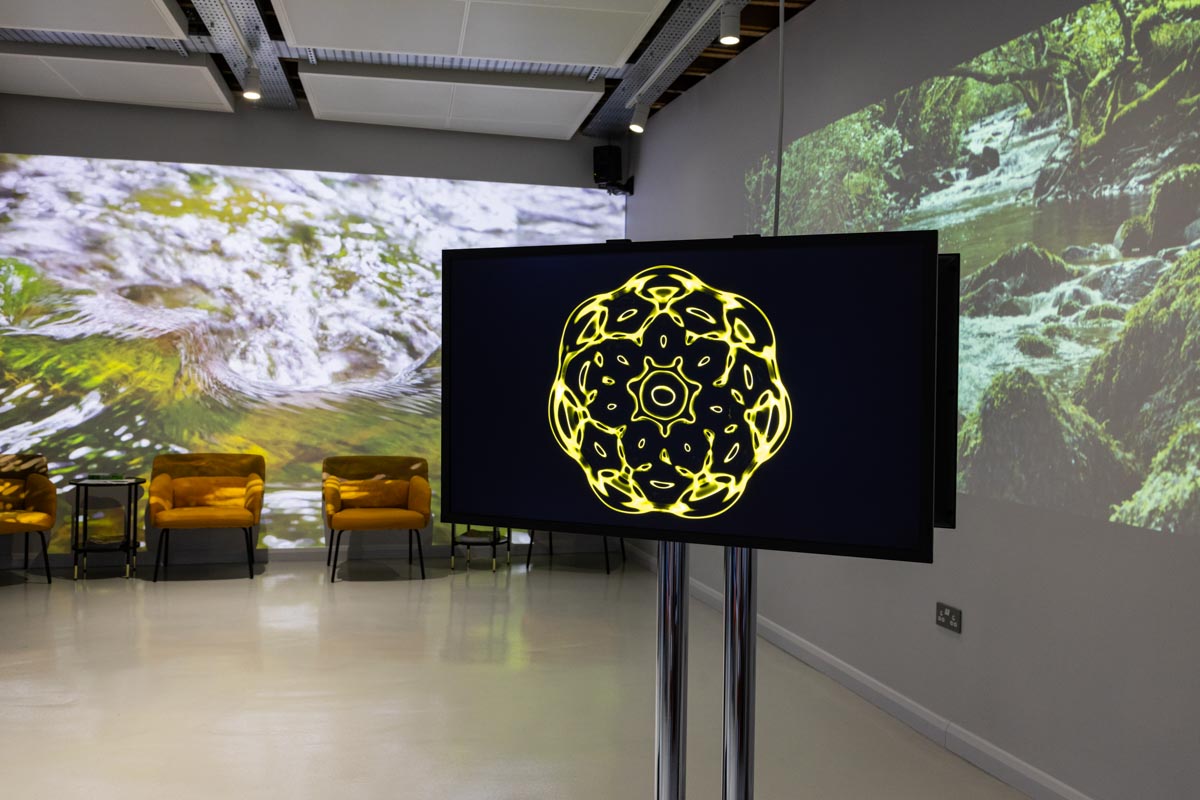
Lotic Waters – The Engine Room, Bridgwater, UK, 21st September to 4th October 2024 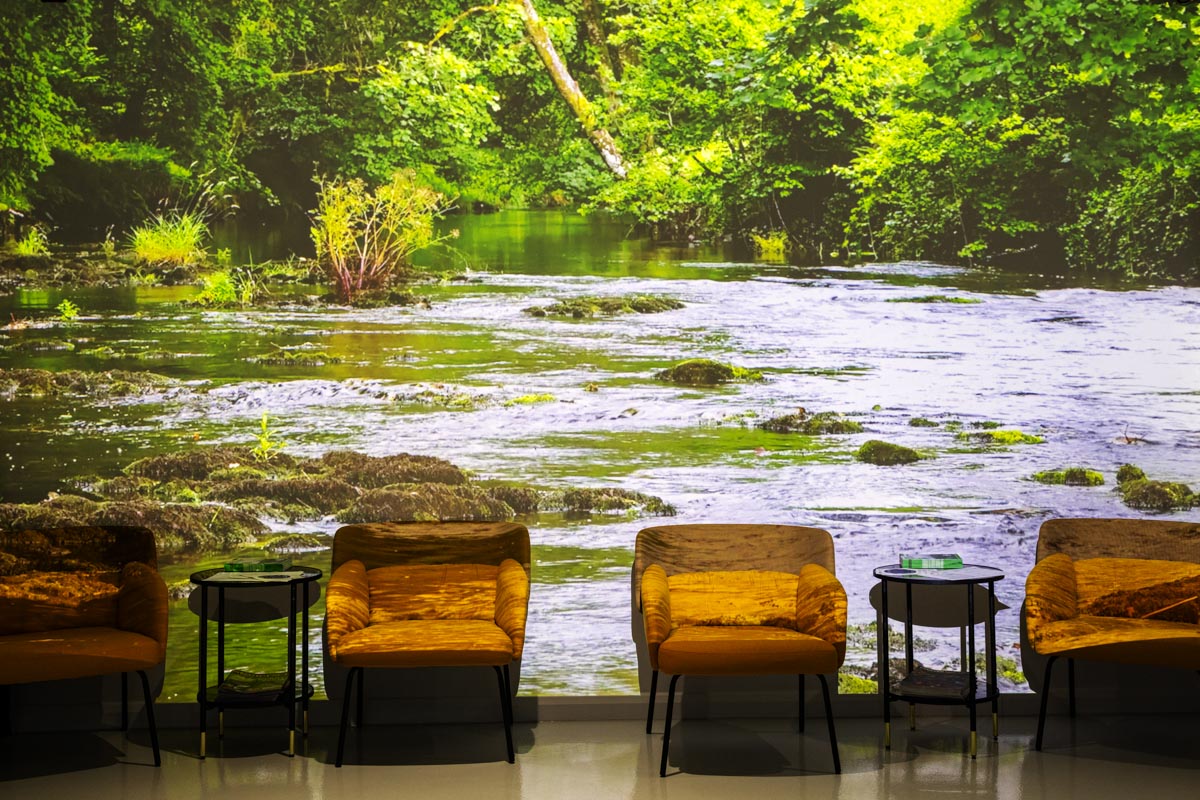
Lotic Waters – The Engine Room, Bridgwater, UK, 21st September to 4th October 2024 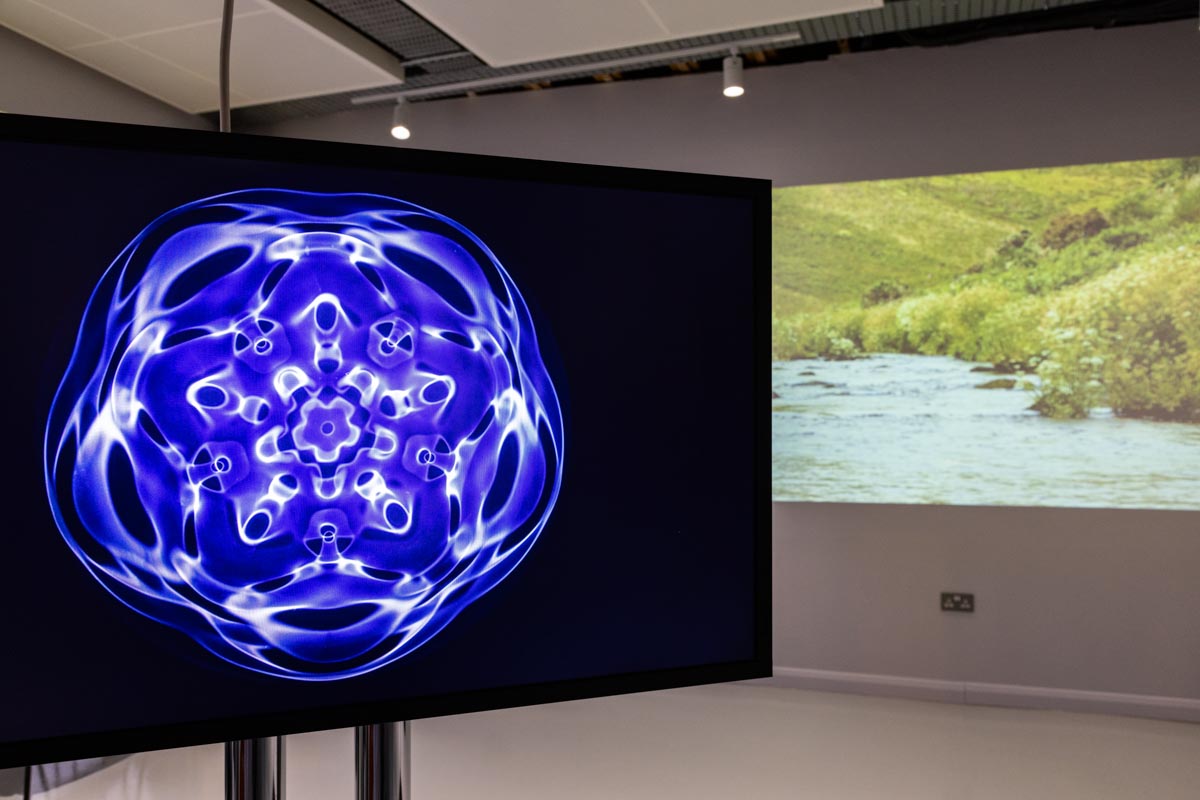
Lotic Waters – The Engine Room, Bridgwater, UK, 21st September to 4th October 2024 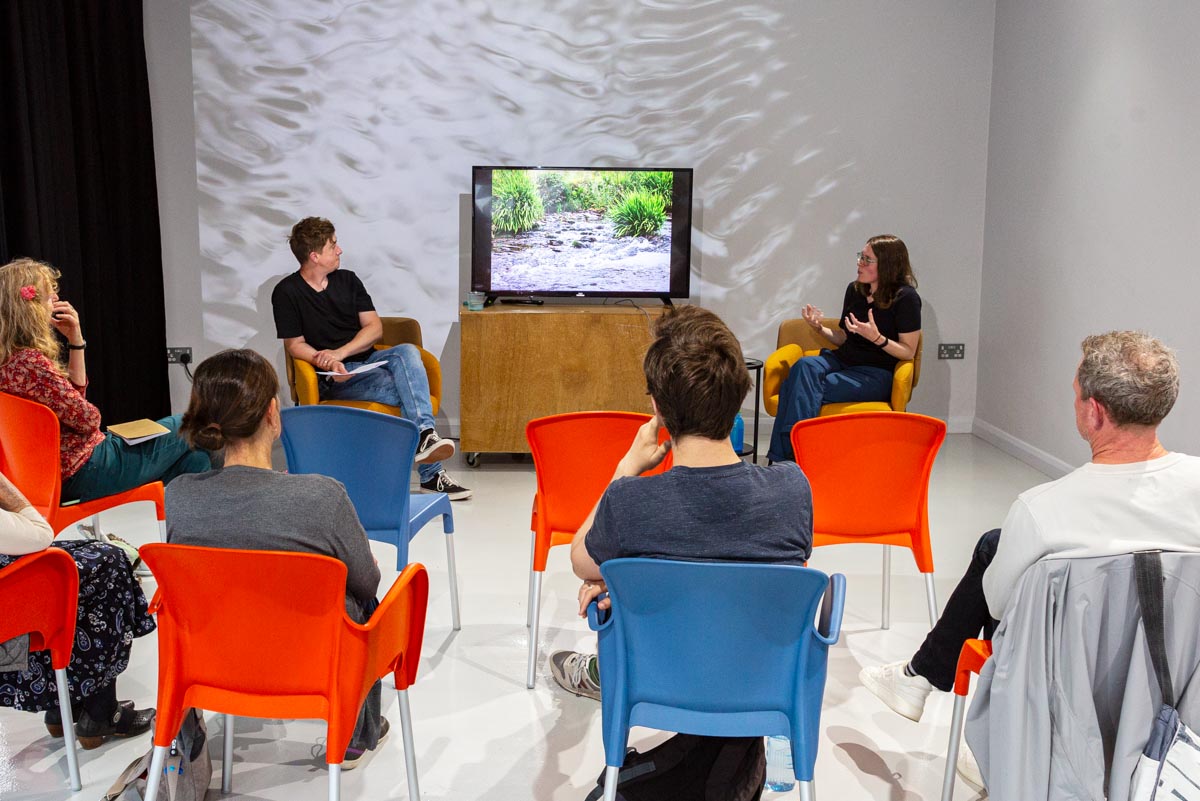
Lotic Waters – The Engine Room, Bridgwater, UK, Artist talk, 7th August 2024
